
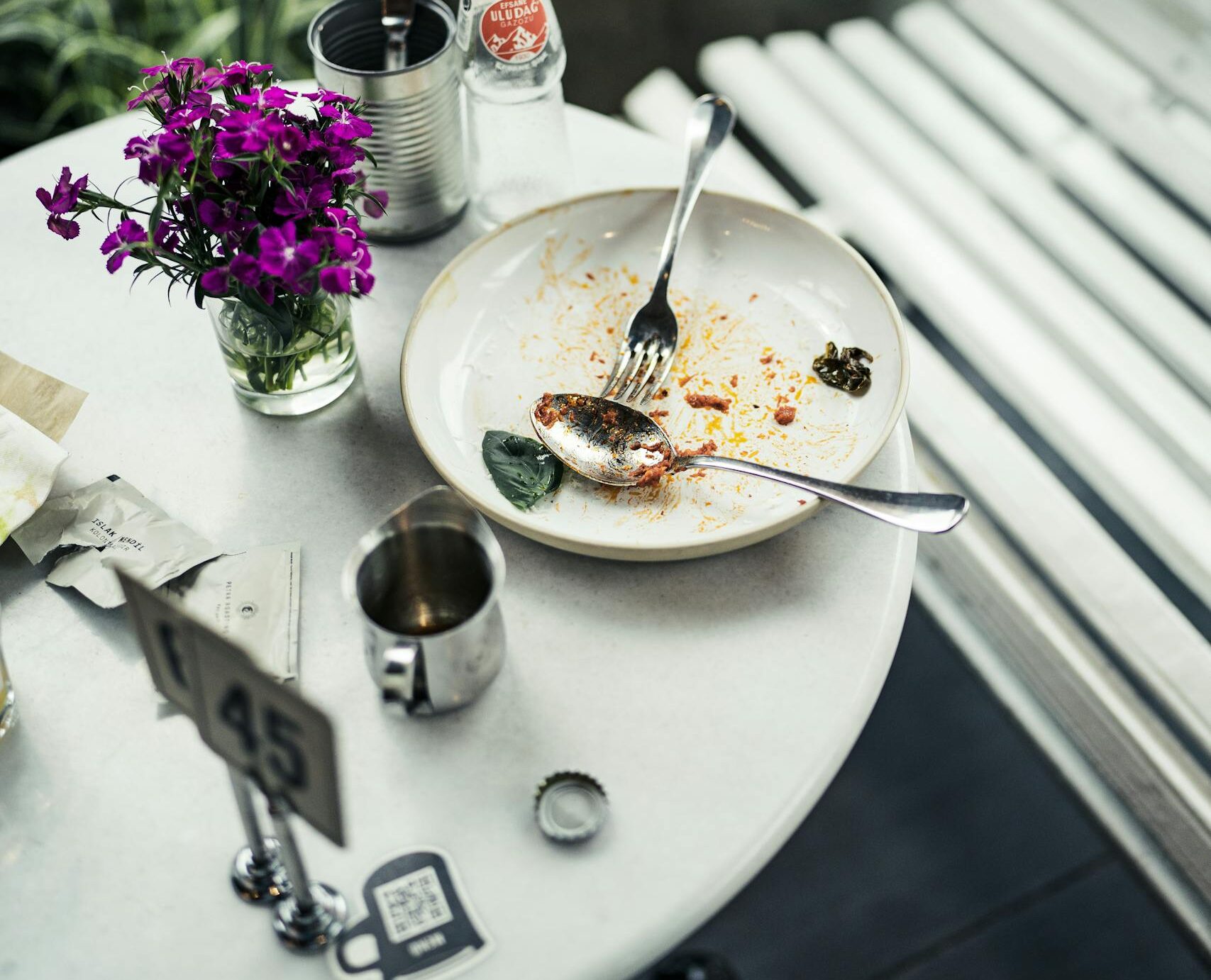
In Vermont, keeping food waste out of the trash isn’t just encouraged — it’s the law. Still, for many restaurants where customers clear their own tables, adding and maintaining customer facing compost bins can feel like a daunting task.
Questions often come up…
Will customers compost correctly?
Will I need extra pickups?
Will it create more work for staff?
Will it look messy?
Last summer, CSWD set out to help answer those questions, and work towards identifying best practices for cafes and fast-casual restaurants.
What We Did
CSWD launched a pilot program focused on customer food scrap collection in fast casual restaurants. The goal was simple: to understand what actually happens when customers have the opportunity to compost their own food scraps, and how businesses are affected.
We partnered with five locally owned businesses across Chittenden and Addison Counties. Each location brought a different level of experience with customer-facing food waste collection. Some were introducing front-of-house food scrap bins for the first time, while others had been refining their systems for several years. Every one of the five businesses shared a strong commitment to sustainability and were already composting well in their kitchens.
Over several weeks, CSWD staff visited each site regularly. During visits CSWD staff collected samples of post-consumer food scraps, weighed the material, and checked for contamination. After the pilot was over, CSWD surveyed managers about what was working and what was challenging.
Why It Matters
Many restaurants want to comply with Vermont’s food scrap requirements and support sustainability efforts. At the same time, they want to be sure the change will work for their team and their customers.
This pilot was intended to collect information locally about the quantity and quality of post-consumer food scraps. By identifying common challenges and effective strategies, we can offer clearer guidance and stronger support to other food service businesses considering this step.
Our goal is to reduce uncertainty and make food waste diversion for restaurants more accessible and achievable.
Results
For more details on implementation, results, and takeaways read the full report:
Initial Observations:
Collection
No businesses that added food scrap collection to their customer facing waste systems needed to increase the size or frequency of compost collection service.
Aesthetics
All businesses reported being very or somewhat satisfied with the appearance of their containers.
Suggestions included adjusting bin height and lids for better visibility and accessibility, as well as creating more specific signage.
Integration
All businesses reported that adding customer food waste bins was easy process.
Few experienced any staff-related challenges during the pilot.
Common Contaminants
Included coated paper wrappers, paper cupcake liners, paper coffee cups with bioplastic lids, tea bags made from plastic, plastic utensils, and straws.
Thank You
We are grateful to the participating businesses for their time, insight, and commitment to sustainability. We also thank the Addison County Solid Waste Management District for their partnership and support throughout this project.
Together, we are closing the loop on food waste and making food scrap diversion easier and more present in our community.
Looking for more ideas on how to reduce waste where you work? Visit CSWD’s Help for Businesses page or sign up for CSWD’s Quarterly Business Newsletter!